3.16.2013

3.09.2013
Week 10: Faith in the Lord Jesus Christ
Song: Faith (CS. 96)
Thought:
“I have never witnessed the removal of an actual mountain. But because of faith I have seen a mountain of doubt and despair removed and replaced with hope and optimism. Because of faith I have personally witnessed a mountain of sin replaced with repentance and forgiveness. And because of faith I have personally witnessed a mountain of pain replaced with peace, hope, and gratitude. Yes, I have seen mountains removed” (“Faith—the Choice Is Yours,” Ensign or Liahona, Nov. 2010, 33).
Object Lesson:
Items Needed: Any type of air freshener that will spray in the air
What to do: Hold up the air freshener. Who can tell me how an air freshener and faith are similar? Discuss. Spray some air freshener in the air. Ask them how it smells. They'll say good. Ask them, how do you KNOW it's good? Tell them that although they can't SEE the air freshener, they can SMELL it. Heavenly Father gave us many different senses to confirm truth. Just like Heavenly Father and Jesus, they are there, we just can't see them, but we can feel and know of their effects in our lives. Sometimes we just need to use our other senses. By following them in faith....OUR faith will turn into knowledge. (Knowledge Requires Faith)
Video: Pure and Simple Faith
Prior to watching this video ask your family members to watch for the mountains that were removed through faith. Also, ask them to determine what knowledge this girl and her family now have because of their choice to act in faith.
Lesson Activity:
For younger members of your family consider adapting the following Sharing Time lesson from The Friend, 1984: The Fruits of Faith
Remember that without faith you can do nothing; therefore ask in faith (D&C 8:10).
President Harold B. Lee once said that “faith and a knowledge of the scriptures can help us meet the challenges of today” (Children’s Sacrament Meeting Presentation 1984). Reading about faithful, courageous men and women in the scriptures can help us to develop the faith and courage we need to make difficult decisions in our own lives. And observing how faithful people today solve their problems can also help our faith to grow.
Faith is like a seed that grows until it bears fruit. Some of the fruits of our faith are the blessings, courage, and strength we receive when we are prayerful and faithful in doing what is right.
Instructions
1. Read scripture references on tree one at a time. Decide what person the story is about and write that person’s name below the reference. Cut out apples not on tree and match each blessing with the person receiving it.


2. Choose another person from the scriptures who showed great faith. Write that name and reference on blank apple on tree. Write appropriate blessing on blank cutout apple.
3. Play the matching game with your family. Let each person tell one story. Ask your parents to tell faith-building stories about your relatives. Make additional apples as needed.
For older members of your family consider the following activity from the Come, Follow Me curriculum for YM and YW.
Ask your family to read the first three paragraphs of Elder Marcus B. Nash’s talk “By Faith All Things Are Fulfilled,” and invite each person to write a one-sentence definition of faith, based on what they read. Ask them to read the story about Ann Rowley from Elder Nash’s talk and identify what Sister Rowley believed and how she acted on her belief. Invite them to share what they find and any experiences they have had that demonstrate the power of faith.
This Week's Challenge: Remind your family that faith is an action. We express our faith in the Lord, Jesus Christ when we act in faith and keep His commandments. Challenge your family to act on their faith this week and pray for increased faith and testimony as they do so.
Thought:
“I have never witnessed the removal of an actual mountain. But because of faith I have seen a mountain of doubt and despair removed and replaced with hope and optimism. Because of faith I have personally witnessed a mountain of sin replaced with repentance and forgiveness. And because of faith I have personally witnessed a mountain of pain replaced with peace, hope, and gratitude. Yes, I have seen mountains removed” (“Faith—the Choice Is Yours,” Ensign or Liahona, Nov. 2010, 33).
Object Lesson:
Items Needed: Any type of air freshener that will spray in the air
What to do: Hold up the air freshener. Who can tell me how an air freshener and faith are similar? Discuss. Spray some air freshener in the air. Ask them how it smells. They'll say good. Ask them, how do you KNOW it's good? Tell them that although they can't SEE the air freshener, they can SMELL it. Heavenly Father gave us many different senses to confirm truth. Just like Heavenly Father and Jesus, they are there, we just can't see them, but we can feel and know of their effects in our lives. Sometimes we just need to use our other senses. By following them in faith....OUR faith will turn into knowledge. (Knowledge Requires Faith)
Video: Pure and Simple Faith
Prior to watching this video ask your family members to watch for the mountains that were removed through faith. Also, ask them to determine what knowledge this girl and her family now have because of their choice to act in faith.
Lesson Activity:
For younger members of your family consider adapting the following Sharing Time lesson from The Friend, 1984: The Fruits of Faith
Remember that without faith you can do nothing; therefore ask in faith (D&C 8:10).
President Harold B. Lee once said that “faith and a knowledge of the scriptures can help us meet the challenges of today” (Children’s Sacrament Meeting Presentation 1984). Reading about faithful, courageous men and women in the scriptures can help us to develop the faith and courage we need to make difficult decisions in our own lives. And observing how faithful people today solve their problems can also help our faith to grow.
Faith is like a seed that grows until it bears fruit. Some of the fruits of our faith are the blessings, courage, and strength we receive when we are prayerful and faithful in doing what is right.
Instructions
1. Read scripture references on tree one at a time. Decide what person the story is about and write that person’s name below the reference. Cut out apples not on tree and match each blessing with the person receiving it.
2. Choose another person from the scriptures who showed great faith. Write that name and reference on blank apple on tree. Write appropriate blessing on blank cutout apple.
3. Play the matching game with your family. Let each person tell one story. Ask your parents to tell faith-building stories about your relatives. Make additional apples as needed.
For older members of your family consider the following activity from the Come, Follow Me curriculum for YM and YW.
Ask your family to read the first three paragraphs of Elder Marcus B. Nash’s talk “By Faith All Things Are Fulfilled,” and invite each person to write a one-sentence definition of faith, based on what they read. Ask them to read the story about Ann Rowley from Elder Nash’s talk and identify what Sister Rowley believed and how she acted on her belief. Invite them to share what they find and any experiences they have had that demonstrate the power of faith.
This Week's Challenge: Remind your family that faith is an action. We express our faith in the Lord, Jesus Christ when we act in faith and keep His commandments. Challenge your family to act on their faith this week and pray for increased faith and testimony as they do so.
Pure and Simple Faith
When the Lord commands a mountain to move, it will move! This young woman's example of faith strengthens my testimony of the Savior and His love for each of us individually.
3.02.2013
Week 9: The Atonement
Song: The Third Article of Faith (CS. 123)
Thought:
Jesus Christ “came into the world … to be crucified for the world, and to bear the sins of the world, and to sanctify the world, and to cleanse it from all unrighteousness; that through him all might be saved” (D&C 76:41–42). The great sacrifice He made to pay for our sins and overcome death is called the Atonement. It is the most important event that has ever occurred in the history of mankind: “For it is expedient that an atonement should be made; for according to the great plan of the Eternal God there must be an atonement made, or else all mankind must unavoidably perish; … yea, all are fallen and are lost, and must perish except it be through the atonement” (Alma 34:9). -Gospel Principles
Object lesson:
To explain death and resurrection, consider this object lesson: Put your hand in a glove. Explain that a hand in a glove can be compared to a person’s spirit in his or her body. Take off the glove. Explain that this is like physical death—the spirit (the hand) and the body (the glove) are separated. Then put the glove back on your hand. Explain that this is like resurrection—the spirit and body are reunited. -Gospel Principles
Discuss with your family that through the Atonement Christ was able to overcome physical death and thus we all will be resurrected again someday. Explain that through the Atonement Christ also took upon himself all of our pains and sins, thus saving us from the fall.
Video: None Were With Him
Lesson Activity:
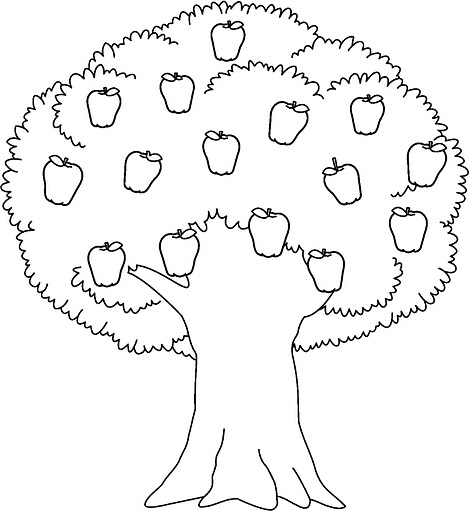
For younger children consider reading the book "The Giving Tree" by Shel Silverstein. Once you have read the story ask them who the Tree reminds them of. Discuss ways that the Savior is like the giving tree and that in sacrificing everything for us he fulfilled the Atonement. Have each child color a picture of an apple tree. If they are old enough have them write or draw something that they consider a blessing in their lives because of the Savior on each of the apples.
Invite the older members of your family to read one of the principles of the Atonement in Linda K. Burton’s talk “Is Faith in the Atonement of Jesus Christ Written in Our Hearts?” Invite them to discuss what they learned and share an example from their own lives or the lives of people they know that illustrates the principle. (Suggested activity for both the Aaronic Priesthood lesson as well as the Young Women lesson.)
This Week's Challenge: Encourage your family to focus this week on the Atonement and how we can apply it in our lives. This month we will be learning about Faith, Repentance, and Forgiveness. Invite them to begin applying these principles in their daily lives and prepare themselves to worthily partake of the Sacrament on Sunday.
Thought:
Jesus Christ “came into the world … to be crucified for the world, and to bear the sins of the world, and to sanctify the world, and to cleanse it from all unrighteousness; that through him all might be saved” (D&C 76:41–42). The great sacrifice He made to pay for our sins and overcome death is called the Atonement. It is the most important event that has ever occurred in the history of mankind: “For it is expedient that an atonement should be made; for according to the great plan of the Eternal God there must be an atonement made, or else all mankind must unavoidably perish; … yea, all are fallen and are lost, and must perish except it be through the atonement” (Alma 34:9). -Gospel Principles
Object lesson:
To explain death and resurrection, consider this object lesson: Put your hand in a glove. Explain that a hand in a glove can be compared to a person’s spirit in his or her body. Take off the glove. Explain that this is like physical death—the spirit (the hand) and the body (the glove) are separated. Then put the glove back on your hand. Explain that this is like resurrection—the spirit and body are reunited. -Gospel Principles
Discuss with your family that through the Atonement Christ was able to overcome physical death and thus we all will be resurrected again someday. Explain that through the Atonement Christ also took upon himself all of our pains and sins, thus saving us from the fall.
Video: None Were With Him
Lesson Activity:
For younger children consider reading the book "The Giving Tree" by Shel Silverstein. Once you have read the story ask them who the Tree reminds them of. Discuss ways that the Savior is like the giving tree and that in sacrificing everything for us he fulfilled the Atonement. Have each child color a picture of an apple tree. If they are old enough have them write or draw something that they consider a blessing in their lives because of the Savior on each of the apples.
(A few years ago a young girl in our ward gave a talk using this story and bore her testimony of the Savior based on it's principles. I have never read the story the same way since!)
Invite the older members of your family to read one of the principles of the Atonement in Linda K. Burton’s talk “Is Faith in the Atonement of Jesus Christ Written in Our Hearts?” Invite them to discuss what they learned and share an example from their own lives or the lives of people they know that illustrates the principle. (Suggested activity for both the Aaronic Priesthood lesson as well as the Young Women lesson.)
This Week's Challenge: Encourage your family to focus this week on the Atonement and how we can apply it in our lives. This month we will be learning about Faith, Repentance, and Forgiveness. Invite them to begin applying these principles in their daily lives and prepare themselves to worthily partake of the Sacrament on Sunday.
2.24.2013
Week 8: Where Are We Going?
Song: Families Can Be Together Forever (CS. 188)
Thought:
Life does not begin with birth, nor does it end with death. Prior to our birth, we dwelled as spirit children with our Father in Heaven. There we eagerly anticipated the possibility of coming to earth and obtaining a physical body. Knowingly we wanted the risks of mortality, which would allow the exercise of agency and accountability. “This life [was to become] a probationary state; a time to prepare to meet God.” (Alma 12:24.) But we regarded the returning home as the best part of that long-awaited trip, just as we do now. Before embarking on any journey, we like to have some assurance of a round-trip ticket. Returning from earth to life in our heavenly home requires passage through—and not around—the doors of death. We were born to die, and we die to live. (See 2 Cor. 6:9.) As seedlings of God, we barely blossom on earth; we fully flower in heaven. (Russell M. Nelson: The Doors of Death)
Object Lesson:
Make 10 word strips which say the following: The Celestial Kingdom; Living Valiantly; Making and Keeping Our Covenants; The Terrestrial Kingdom; Having a testimony (if you had the chance), but being only lukewarm in your devotion; Living a clean and honorable life, but not valiant in faith; The Telestial Kingdom; immorality; lying; pride & rebelliousness. Place the word strips with the 3 kingdoms on them on a table or on the ground. Then take 3 pieces of string and lay them out so that they are leading to each kingdom. Explain to your family that the strings represent the pathways that lead to each of the kingdoms. The choices that we make win this life will determine which pathway we are on and which kingdom we will be worthy to attain. Remind your family that those who pass on from this life without having an opportunity to learn the gospel will have that chance in Spirit Prison prior to the judgement day and Resurrection. Then have your family members choose from the remaining word strips and place them along the appropriate pathways. (This idea is adapted from an FHE lesson plan done by Jenny Phillips in 2011 that is no longer available. Jenny Phillips has made several FHE lesson plans available for free download to her fans.)
Video: Until We Meet Again
Prior to watching this video discuss with your family how difficult it can be for people who have no knowledge of the plan of salvation to cope with the loss of a loved one. Acknowledge that even those with a testimony of the plan of salvation experience grief and even depression, but generally the pain from the loss is lessened by their testimony. Once the video is over invite your family members to share ideas regarding how we can comfort others when the are grieving over the loss of a loved one. Remind your family once again that "Men are that they might have joy." Bear testimony to your family of the eternal nature of families and what glory our Father has in store for us.
Activity:
Consider preparing hand puppets for younger children using this activity from The Friend (March 1986)
For the older members of your family consider the following activity from the Come, Follow Me curriculum.
Invite family members to write down their questions, thoughts, or fears about death, and then have them search for answers in Elder Russell M. Nelson’s talk “Doors of Death.” Encourage them to note in particular scriptures or statements that highlight the Savior’s role in helping us overcome death. Ask them to share what they find. Invite them to share their feelings about what the Savior has done for us.
This weeks challenge: As a family prayerfully consider someone you may know who has lost a loved one that could use comfort at this time. Find a way to comfort that individual or family by providing service or bearing testimony of the plan of salvation.
If there is no one that you know that you could do this for then consider praying as a family that you will have an experience this week to bear testimony of the plan of salvation to someone (especially about where we are going after this mortal life).
2.22.2013
Three Degrees of Glory
When the Prophet Joseph Smith went to the Lord with questions about what happens to us after this mortal life he received a vision that is now recorded as Doctrine and Covenants 76. This revelation is widely considered one of the most important visions known to man. In 2002 I was able to participate in a class taught by Lawrence R. Flake where I learned that Joseph Smith also wrote this revelation out in poetic form. For additional insight on this beautiful revelation and the gospel principles that were restored through it I would highly recommend studying the book "Three Degrees of Glory: Joseph Smith's Insights on the Kingdoms of Heaven" by Lawrence R. Flake.

(This post is not sponsored and is purely my opinion and recommendation of an excellent resource when learning about and preparing to teach about the kingdoms of Heaven.)
(This post is not sponsored and is purely my opinion and recommendation of an excellent resource when learning about and preparing to teach about the kingdoms of Heaven.)
Subscribe to:
Posts (Atom)